Why I Keep My Client List Small
Written by Abdul Kalam, Pilates instructor · For educational purposes only; not medical advice.
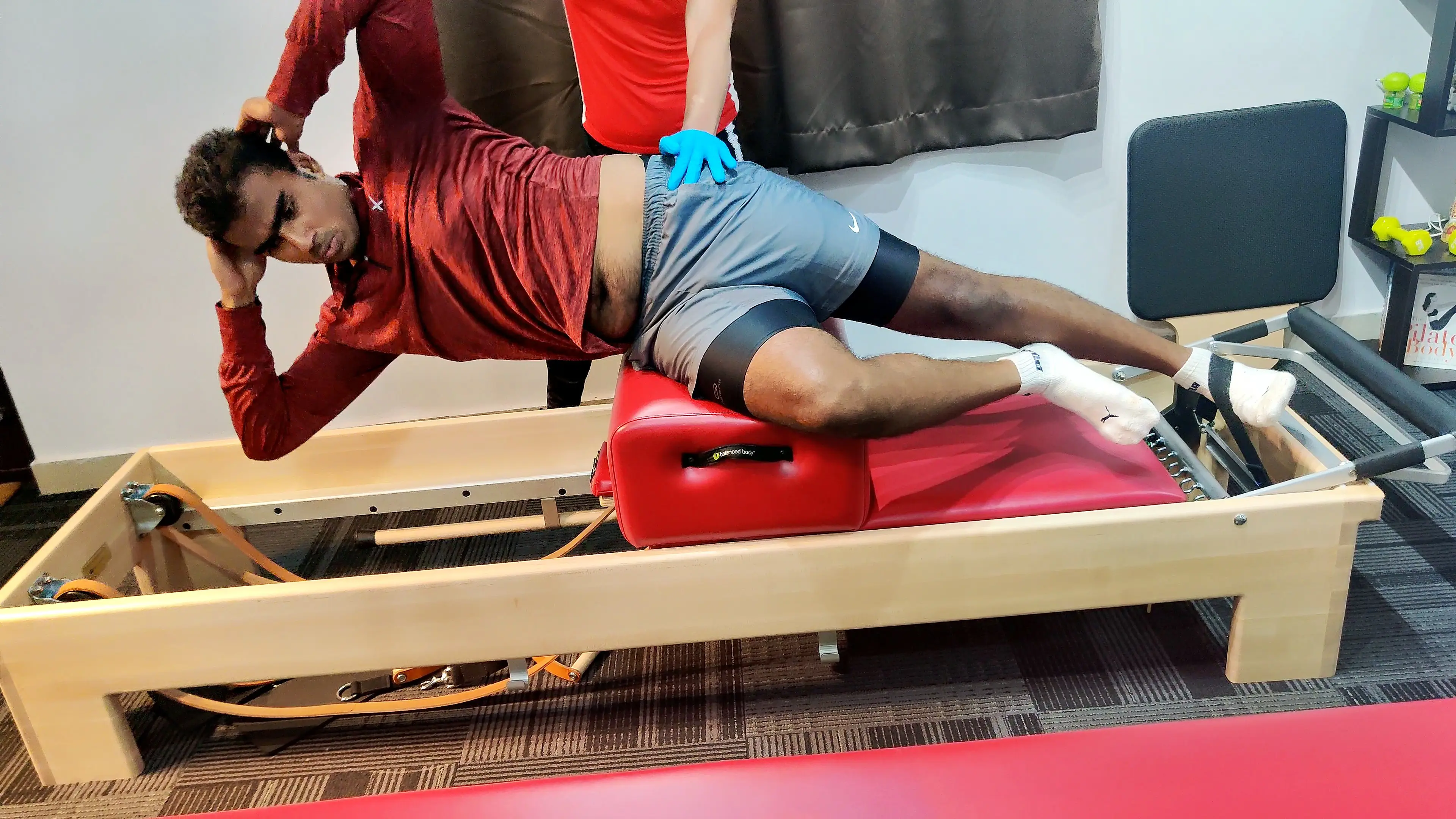
The studio operates by appointment only. There is no walk-in availability, no class schedule, and no membership structure. A small number of clients practise here regularly. New clients begin with at least two sessions a week. Established clients may later have different schedules as circumstances change. I keep the number small because I work alone and teach one client at a time.
What Attention Actually Requires
Teaching Pilates well requires sustained, undivided attention. Not the kind of attention that can be distributed across multiple people simultaneously — the kind that follows one body through one session, notices how the movement changes from exercise to exercise, adjusts the cueing based on what the client is showing, and tracks patterns across weeks and months.
That quality of attention has a capacity limit. It is not infinite. A teaching day that begins with full presence and careful observation does not maintain that standard across an unlimited number of sessions. At some point the attention becomes thinner — still present, still professional, but no longer at the level the work requires.
Working with a small number of clients is how I keep the attention consistent. Not distributed across more people than I can teach well. Not stretched beyond the point where observation becomes thin.
What Continuity Produces
Every client who practises here regularly has a movement history that I know in detail. Not from the intake form alone — from observation across dozens or hundreds of sessions. I know which patterns respond quickly and which resist. I know what a client's body looks like when they are tired versus when they are rested. I know the difference between a movement quality issue that needs to be addressed and one that is a temporary consequence of a difficult week at work.
That depth of knowledge is only possible through continuity. Notes are useful, but they do not replace what is learned through repeated observation over time. A much larger client roster would make that continuity difficult to maintain at the same depth.
The work that becomes possible with continuity is different from work built around occasional attendance. Progression can be more precise. New material can be introduced with better context. The client understands the work well enough to participate in decisions about it, and I understand the client's movement history well enough to make those decisions with more information.
How a Small Client List Works
There is a limit to how many sessions I can teach properly in a day and across a week. I am not trying to increase that number indefinitely. The studio works because a small number of clients attend consistently over time.
Clients still leave, pause, relocate, or change priorities. When that happens, a place may become available. The arrangement remains workable as long as the number of continuing clients stays within what I can teach properly.
The alternative — maximising the number of clients to increase revenue — produces a different kind of studio. One that can sustain higher overhead, employ additional instructors, and serve more people. That is a legitimate model. It is simply not this one. This studio is built around one instructor, one client, and the limits of that arrangement.
What Is Easier to Maintain in a Small Studio
There are conditions in a small, quiet studio that do not scale easily: one instructor following one body, a relationship measured in years rather than sessions, and a known baseline against which small changes in movement can be observed.
These qualities are not impossible to find in larger operations. But they require deliberate effort to preserve as scale increases. In a small studio they are built into the model more directly.
Who This Model Serves
Not everyone who wants to practise Pilates is looking for what this studio offers. Some people want the energy of a group environment, the social dimension of a shared class, the flexibility of dropping in when the schedule allows. Those are legitimate preferences and there are studios that serve them well.
This arrangement is for people looking for consistent individual instruction, a quiet private environment, and continuing practice rather than occasional attendance. The studio is organised around those conditions.
A Simple Choice
The decision to work with a small number of clients is ultimately a decision about what kind of teaching is possible and what kind of work this studio is built to do. It is not a compromise. It is the operating structure.
One instructor. One client. The full apparatus. Undivided attention. A long-term commitment to the work. That is the studio. That is the choice.
Working with a small number of clients is not a limitation. It is the operating structure of this studio.