What Pilates Can and Cannot Do
Written by Abdul Kalam, Pilates instructor · For educational purposes only; not medical advice.
People often arrive at Pilates with a specific expectation. They may have heard that it corrects posture, fixes back pain, rehabilitates injuries, builds a stronger core, or produces visible change within a set number of sessions. Some of these descriptions point towards qualities that movement practice may address. Others go beyond what a Pilates instructor can responsibly promise.
For someone considering this studio, the distinction matters. Pilates is taught here as movement education. The work concerns coordination, control, breath, alignment, strength, mobility, balance, and the way the body organises movement. It is not offered as diagnosis, medical treatment, rehabilitation, or a guaranteed solution to a condition.
What Joseph Pilates Claimed for His Method
Joseph Pilates wrote broadly about the purpose of Contrology. In Return to Life Through Contrology, he described it as developing the body uniformly and restoring physical vitality. Elsewhere in the same book, he connected regular practice with suppleness, coordination, endurance, and the way a person walks, works, and takes part in physical activity.
Those were his claims for the method, written in the language and context of his time. They should be read as his account of what consistent practice could cultivate, not as a medical guarantee made by this studio. His writing is important to understanding the method, but it does not replace contemporary medical assessment, individual variation, or the professional limits of an instructor.
Posture Is Not a Single Position
Pilates is frequently presented as posture correction. That phrase can be misleading if it suggests that there is one ideal position into which every person should be placed.
In practice, posture is not separate from movement, strength, mobility, habit, fatigue, work demands, injury history, and the way a person organises themselves under different conditions. The studio can observe how someone sits, stands, lies, bears weight, moves through the apparatus, and responds to cueing. The work can then address what is observable within a movement session.
That is different from diagnosing the cause of pain or declaring that a person’s posture has been medically corrected. A Pilates instructor can teach movement and make practical observations within that scope. Medical interpretation belongs with an appropriately qualified healthcare professional.
Consistency Matters, but It Is Not a Formula
Joseph Pilates placed considerable emphasis on regular practice. In Return to Life, he described practising the Mat sequence four times a week for three months. That is a more substantial and specific commitment than the abbreviated promises often associated with Pilates today.
The point I take from his writing is not that three months guarantees a particular result. It is that the method was presented as a practice requiring repetition, attention, and time. What changes, how quickly it changes, and whether a change is noticeable depends on the individual, the work undertaken, attendance, health, prior movement experience, daily habits, and factors outside the studio.
Private instruction does not create certainty. It provides a setting in which the work can be observed closely and adjusted over time.
The 10–20–30 Sessions Quotation
A quotation widely attributed to Joseph Pilates promises that after ten sessions a person will feel a difference, after twenty they will see a difference, and after thirty they will have a new body. I have not found that wording in either of the two books he published during his lifetime.
This studio does not use that quotation as a promise or as a timetable. Ten, twenty, or thirty sessions may represent a meaningful period of practice, but the number alone says nothing about what was taught, how regularly the person attended, what they brought to the work, or what outcome they expected.
Progress is therefore discussed in observable terms: whether a movement has become clearer, whether control has improved, whether a range is more available, whether the client understands an exercise better, or whether the work can be progressed safely. These observations do not amount to a guaranteed transformation.
Exercise Is Only One Part of Physical Wellbeing
Joseph Pilates also wrote that exercise alone was not sufficient for complete physical fitness. He referred to sleep, diet, rest, and daily habits as part of the larger picture. That limitation remains sensible.
A studio session occupies a small part of a person’s week. Health, recovery, work, stress, sleep, nutrition, medical conditions, medication, age, genetics, and activity outside the studio may all affect what is possible. Pilates does not override those factors.
The instructor’s responsibility is to teach the work within the information available, the client’s current capacity, the apparatus being used, and any relevant medical guidance. The client remains responsible for providing accurate information, seeking appropriate healthcare where needed, and communicating changes that may affect participation.
Pain, Injury, and Medical Conditions
Structured movement may be suitable for some people who also have pain, an injury history, or a medical diagnosis. That does not turn the studio into a treatment setting.
Where symptoms, injury, surgery, pregnancy, or a medical condition are relevant, appropriate medical assessment or clearance may be required before studio-based movement work is considered. The studio may also decide that the available information, current symptoms, or required level of care falls outside its scope.
During a session, an exercise may be adjusted, deferred, or omitted. If pain, dizziness, unusual shortness of breath, loss of function, or another concerning response occurs, the session may stop and further medical guidance may be requested. These are limits of responsible movement instruction, not failures of the method.
What the Studio Offers
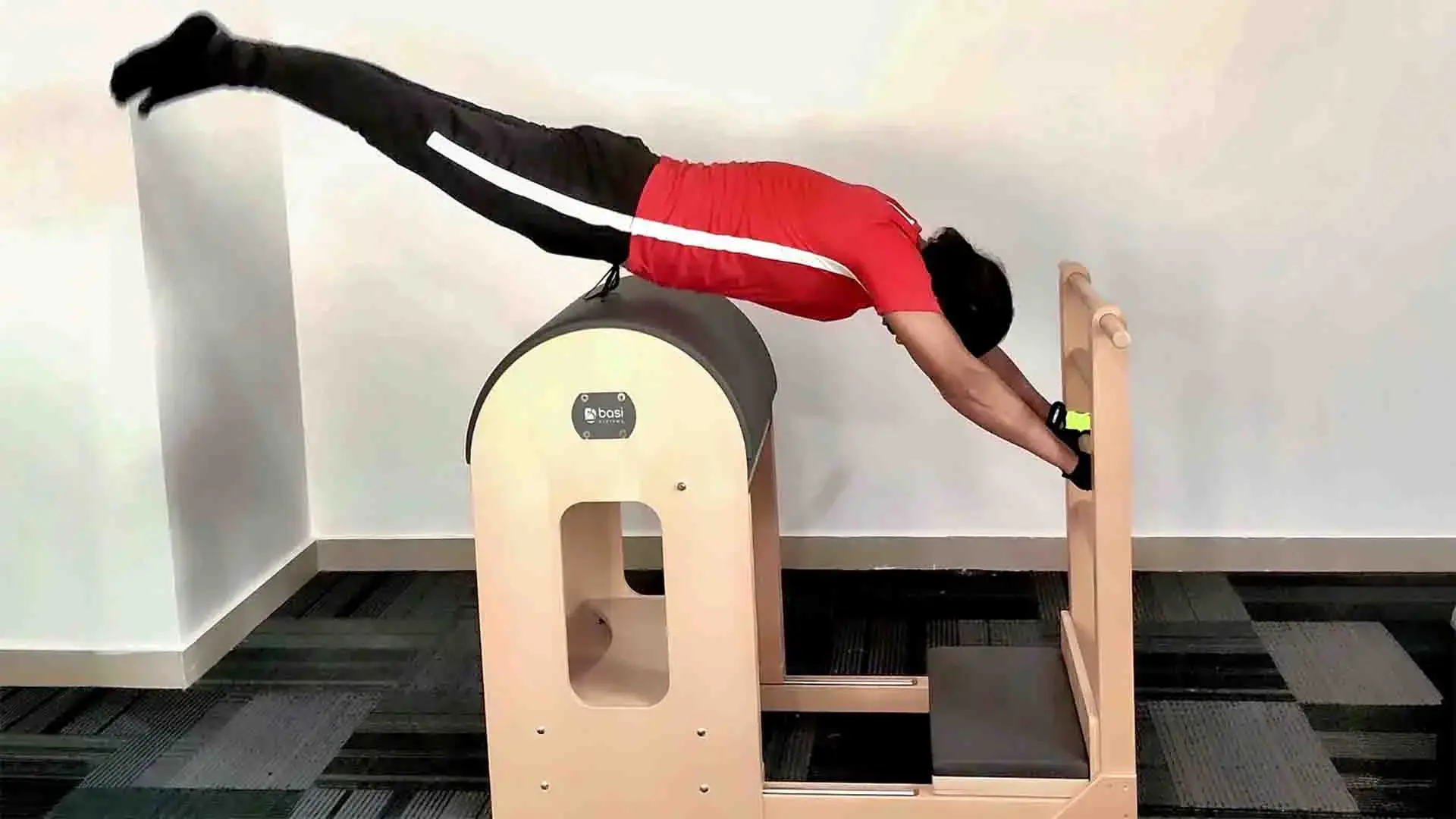
The studio offers one-to-one Pilates instruction using the full apparatus available in the space. The work is observed closely and developed through regular sessions over time. It may be demanding, detailed, and useful as a structured physical practice.
What it does not offer is a cure, a diagnosis, rehabilitation, a guaranteed change in appearance, or a fixed result after a stated number of appointments. A prospective client should assess the studio on those actual terms.
This studio teaches Pilates as movement education. It does not provide diagnosis, treatment, rehabilitation, or guaranteed outcomes.