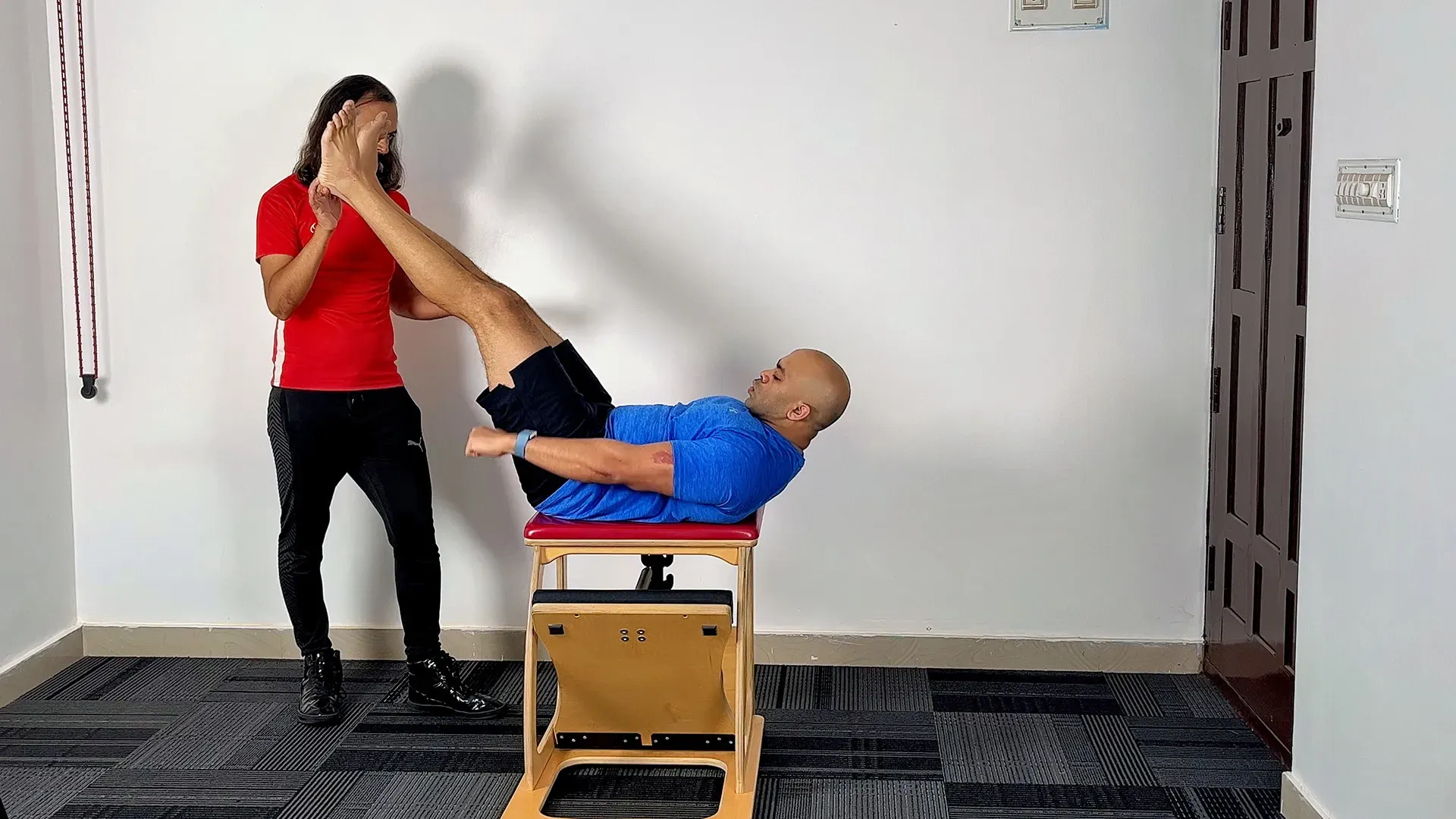
What Long-Term Pilates Practice Can Look Like
Written by Abdul Kalam, Pilates instructor · For educational purposes only; not medical advice.
Many people begin Pilates with a particular concern. They may feel stiff, less confident in movement, or simply aware that their body no longer moves as freely as it once did. That concern may be the reason for beginning, but it does not determine exactly how the practice will develop.
Long-term practice does not unfold in a straight line, and I do not present it as steady, measurable improvement from one session to the next. What I often observe is quieter: the client becomes more familiar with the exercises, the apparatus, the language of the method, and the way their own body responds under different conditions.
Beginning the Work
At the beginning, much of the work is unfamiliar. The client is learning the sequence, the names of exercises, how to approach the apparatus, how breath and movement are coordinated, and how to respond to instruction without trying to correct everything at once.
Some clients begin noticing differences in effort, breathing, range, or how the two sides respond. Others notice very little at first. Neither response is treated as proof that the method is or is not working. Early sessions provide information, and that information continues to develop over time.
A movement that initially requires close attention may later feel more organised. I do not attribute that change to one decisive session. It is usually the result of repeated practice, feedback, rest, and the client becoming more familiar with the demand.
Developing Familiarity
As familiarity develops, exercises that once felt foreign may become recognisable. The client may remember the setup, understand a transition, or respond to a cue without needing a long explanation. This does not mean the exercise has become easy or complete. It means less attention is being used merely to understand what comes next.
That allows the instruction to become more specific. We may return to the same exercise with attention directed toward timing, breath, control, range, or the relationship between different parts of the body. The exercise remains familiar while the quality of attention changes.
Progression is not tied to a session number. More demanding exercises are introduced when I have enough information about the client, the earlier work is sufficiently familiar, and the exercise is appropriate for that person on that day. Being able to reproduce the outward shape of an exercise is not, by itself, the reason to introduce it.
Recognising Relationships Within the Method
With continued practice, some clients begin to recognise relationships between exercises rather than experiencing each one as an isolated task. A movement encountered on the Reformer may appear again under different conditions on the Cadillac, Chair, Barrel, or Mat.
This recognition is not required, and it does not appear on a fixed timetable. When it does appear, the method can begin to feel less like a list of exercises and more like a connected body of work. The client has more context for why a familiar movement is returning and what the new apparatus or setup changes.
Interruption and Return
Long-term practice is rarely an uninterrupted sequence of appointments. Travel, illness, family responsibilities, work, and other circumstances can reduce frequency or create a temporary absence.
Many clients who return after a break are not beginning again from the first day. Some familiarity remains: exercise names, the feel of the apparatus, the working relationship, and the record of what has been practised before. Certain movements may initially feel less available, but return is different from arrival.
Consistency therefore does not mean perfect attendance. In this studio, it means returning to the work when circumstances allow and letting the practice develop across a longer period rather than judging it only by isolated sessions.
What Long-Term Practice Does Not Promise
Long-term practice is not a guarantee that an original concern will disappear, that the body will change on a schedule, or that progress will always be visible. Health, activity outside the studio, medical conditions, sleep, stress, attendance, and many other factors affect what a person experiences.
It is also not an obligation. A multi-year practice is one way a relationship with the method can develop. Each client remains free to decide whether the work continues to be suitable and worthwhile for them.
What the studio can offer is sustained observation, a consistent teaching relationship, and repeated access to the method over time. What develops from that is individual and cannot be promised in advance.
A long-term practice is not a transformation sold in advance. It is a relationship with the work that may deepen through familiarity, repetition, interruption, and return.