My Strength Is Not What I Add. It Is What I Refuse.
Written by Abdul Kalam, Pilates instructor · For educational purposes only; not medical advice.
I want to say something that took me several years and every teaching format in this field to understand.
I began as a student in 2016, stepping into a Bengaluru studio rooted in the Classical Pilates tradition. Not to become an instructor — to understand the work from the inside. From April 2017 to April 2018 I completed a 600-hour full apparatus immersion at that same studio. Then from July 2018 I began teaching there as a freelancer.
For three years I taught everything. Group classes. Semi-private sessions. Community lessons. Private sessions. The full range of what Pilates instruction looks like across different formats and different contexts.
I was not a reluctant group teacher. I showed up to those sessions with the same attention I brought to everything else. I observed, I instructed, I cued, I adjusted. I tried to do the work as well as the format allowed.
But I was watching. And what I was watching was the difference between what each format made possible and what each one made impossible.
Nothing matched private.
What the Comparison Showed
In a group class, observation is partial by necessity. You watch six or eight or ten bodies simultaneously and your attention distributes across all of them. You see the obvious things. You catch the significant compensations. But the subtler patterns — the breath that does not quite happen, the small hesitation before a movement, the way one side of the body organises differently from the other — these require time and focus that a group setting cannot provide.
In a semi-private session, the ratio improves but the fundamental problem remains. Two people move differently. They are at different stages. What one needs at a given moment is not what the other needs. You are constantly managing a compromise — choosing between giving one person what they need and keeping the other engaged. Neither gets the session they would get alone.
Community lessons taught me something else. They revealed how much of what passes for Pilates instruction is actually crowd management. Keeping everyone moving. Keeping energy in the room. Keeping the class feeling productive. These are real skills. They are not the same skill as teaching someone how their body actually moves.
Private instruction is a different thing entirely. One body. One hour. One instructor whose entire attention is available for that session. No compromise, no distribution, no managing. Just the work, as precisely as the student's current capacity allows.
After three years of teaching all of it, the conclusion was not difficult to reach. The formats were not equally effective with different trade-offs. They were categorically different activities. One of them was what I wanted to do. The others were not.
July 1, 2021
The date is specific because the decision was specific. Not a gradual drift away from group teaching. Not a slow reduction in formats over time. A line drawn on a particular day.
I had begun my advanced mentorship in 2020, while still freelancing. That period of deeper study clarified something I had been moving toward for a while — not just what I wanted to teach, but what conditions the teaching I believed in actually required. By the time I completed the mentorship in 2021, the decision was already made. July 1 was the first day of the studio as it now exists.
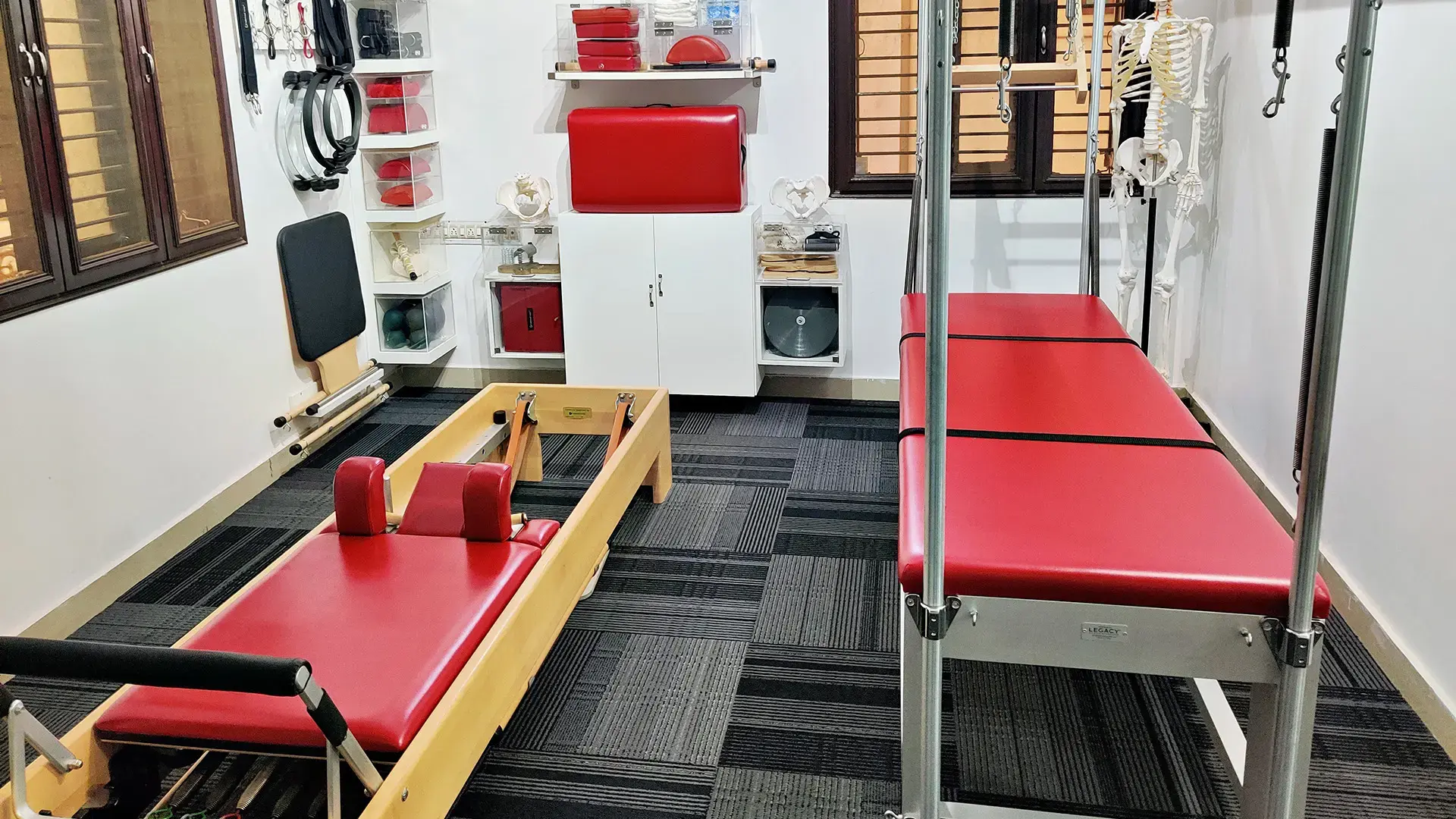
One instructor. One client per session. The full apparatus. Appointment only. No groups, no semi-privates, no community lessons. Not as a positioning strategy. As a direct consequence of what three years of comparison had shown me.
What Refusal Looks Like in Practice
Since that date I have been asked, in various forms, to return to what I left behind.
People ask me to teach groups. The answer is no — not because I cannot, but because I understand from direct experience what a group session can and cannot do. I am not refusing something I have not tried. I am declining to return to something I tried for three years and found insufficient for the work I want to do.
People arrive wanting one session to try before committing. The answer is no. A single session is not a meaningful unit of this work. It tells the student something but not very much, and it tells me almost nothing about how their body will develop over time. The studio is not built for one-off encounters.
People arrive because their doctor recommended Pilates. I explain, as clearly and as kindly as I can, that what I do is movement education — not rehabilitation, not treatment, not a prescription to be filled. I direct them to practitioners working in a clinical capacity. This is not a limitation I apologise for. It is an honest description of the scope of the work.
People arrive on a vacation, regular and enthusiastic, and tell me they will decide how to continue once they return to work. I do not accept that as a commitment. Enthusiasm in a period of free time is real but it is not the same as commitment in the context of a full life. The studio is for people who have already made the decision, not people who are deciding.
People arrive with status — professional profile, social reach, a name behind the referral that carries weight in certain circles. The consultation asks the same questions it asks everyone. The standard does not have exceptions for notable people. If it did, it would not be a standard.
None of these refusals are easy. Some of them are uncomfortable. A few have cost me relationships I valued. I have said no to people I liked, people who came genuinely recommended, people who would have been perfectly fine clients at a different kind of studio. But this is not a different kind of studio.
What Refusal Protects
When I decline someone, I am not making a judgement about them. I am making a judgement about what the work requires.
The Pilates method — the original, complete system, taught in its full form — requires time. It requires a body that shows up regularly enough for patterns to genuinely change. It requires a student who is present in the session rather than simply completing exercises. It requires a relationship between instructor and student that develops over months and years, not one that begins and ends within a trial period.
These are not preferences. They are structural requirements of the method itself. When a student does not meet them, the work that happens in the studio is not the work I am here to do. It might be useful. It might even be pleasant. But it is not this.
Every refusal protects the standard. The standard protects the work. The work is the only thing that matters.
The Pressure to Add
The pressure to expand is constant and it does not always announce itself as pressure. Sometimes it arrives as opportunity. Sometimes as generosity. Sometimes as simple common sense.
Someone suggests I could reach more people with online sessions. Someone observes that a workshop format would let me teach the same content to ten people at once. Someone points out that the studio is available on days I do not teach and suggests I rent it out or bring in another instructor.
Each suggestion is reasonable on its own terms. Each one, if followed, would change what the studio is.
I have not followed them. Not because I am unable to see their logic but because I understand clearly what I am protecting and I have chosen, repeatedly, to protect it.
A private studio that teaches the original Pilates method, one client at a time, over years, is a specific thing. It is not easily explained to someone who has not experienced it. It is not scalable. It is not efficient by any conventional measure.
It is, however, exactly what it says it is. And that consistency — between what the studio claims to be and what it actually does — is not incidental to the work. It is inseparable from it.
What Five Years of This Has Produced
My practice has grown entirely through word of mouth. No advertising. No promotions. No discounted trials to attract new clients.
The clients who are here have been here for years. Some have rearranged their lives around their sessions. One travels across the city every week. Another trains with me remotely from another country because they cannot find this standard of instruction where they now live.
These are not outcomes I engineered. They are what happens when you do one thing consistently, without diluting it, and let the work speak for itself over time.
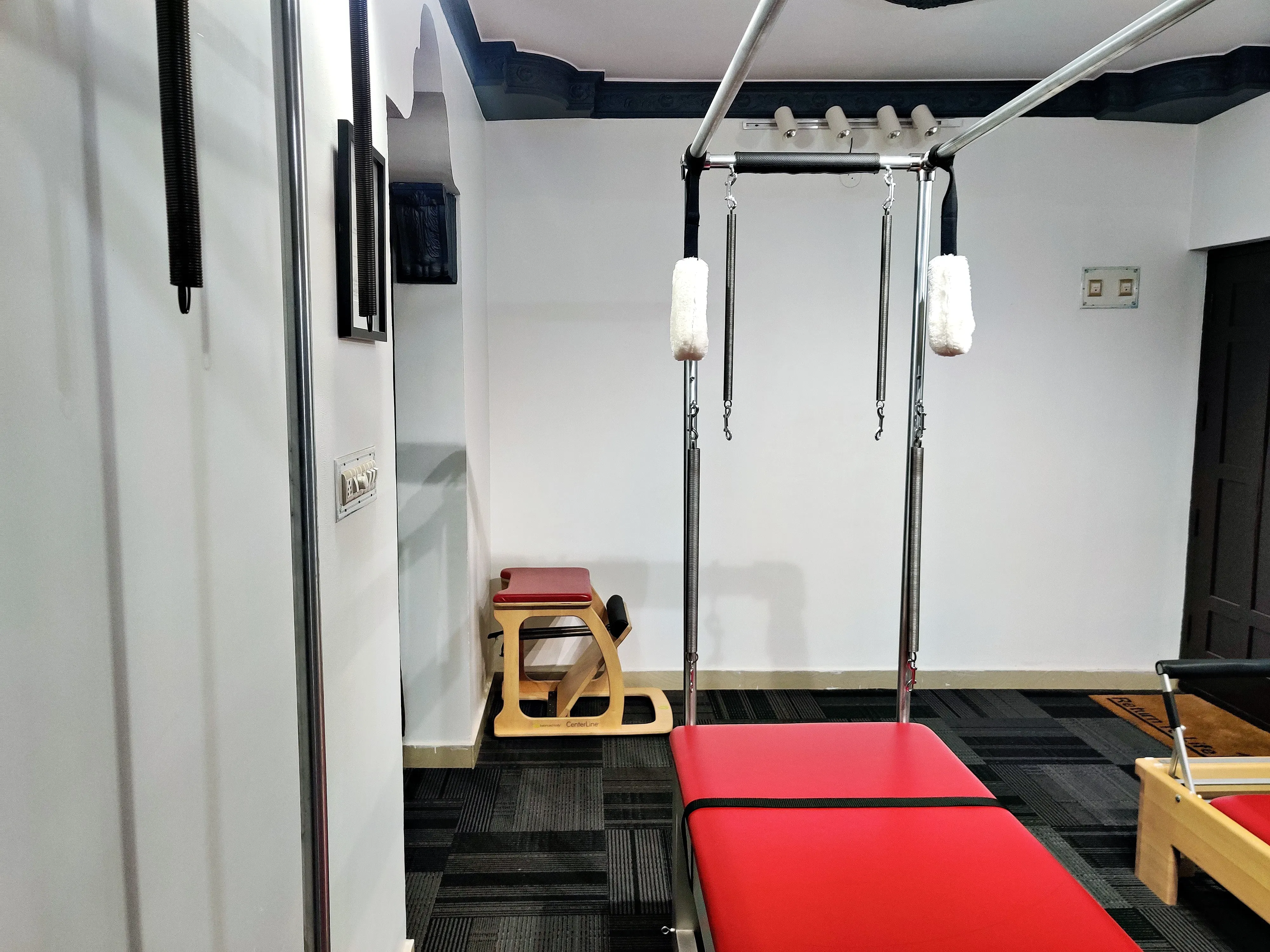
The studio is small by design. The client list is limited by design. The investment required — in time, in commitment, in showing up regularly over years — is significant by design. These are not constraints I am working around. They are the conditions under which the work I believe in is possible.
A Note on What This Is Not
This is not an argument that private instruction is superior and everything else is worthless. The other formats serve real purposes for real people. Group classes bring people into movement who would never begin otherwise. Community lessons make Pilates accessible in ways private instruction cannot. These are genuine contributions to a field I care about.
This is an account of what I found when I compared them directly, over three years, and what I chose as a result. Someone else might compare the same formats and reach a different conclusion. I am not claiming the conclusion is universal.
I am claiming it is mine. And that acting on it honestly, without hedging toward what is more commercially convenient, is the only way the studio makes sense.
The Line
My strength is not what I add. It is what I refuse.
I refused group teaching because I had taught groups and found it insufficient for this work.
I refused expansion because I understand what expansion would cost.
I refuse, session by session, the small accommodations that would make the studio more convenient and less itself.
The line was drawn on July 1, 2021. Every refusal since then has been an act of holding it.
That is the work. Not just the sessions. The decisions around the sessions. The standard that makes the sessions worth anything.
If you are reading this and wondering whether this studio is right for you — that is the right question. The answer depends not on what you want from Pilates but on what you are prepared to bring to it.
If the answer is consistent, patient, long-term commitment to the method as it is taught here — there may be a conversation worth having.
If the answer is something else, I hope you find what you are looking for. This particular place is for a particular kind of practitioner. That is not a limitation. It is a design.