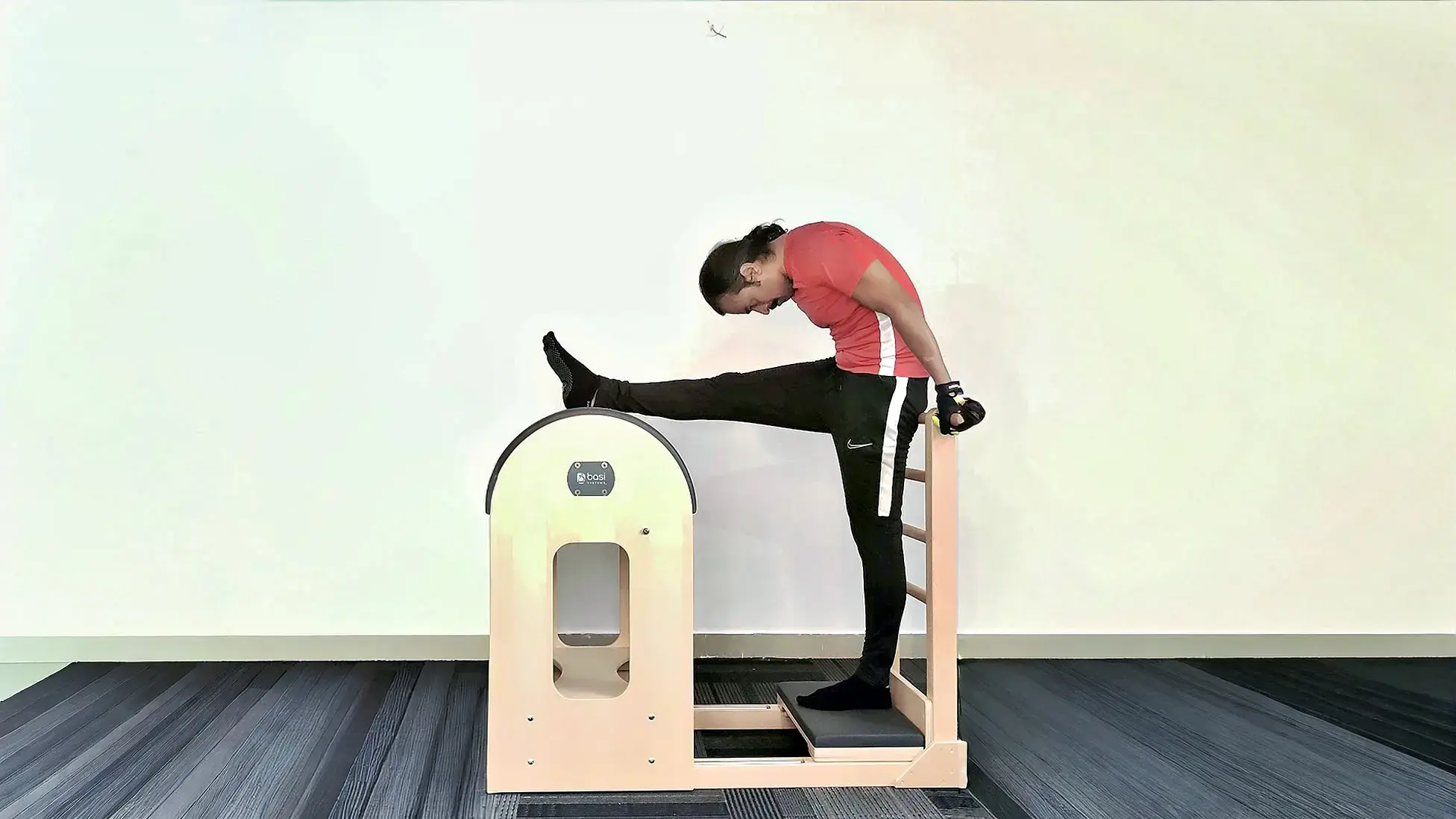
Understanding Postural Imbalances: Restoring Structural Alignment Through Movement
Written by Abdul Kalam, Pilates instructor · For educational purposes only; not medical advice.
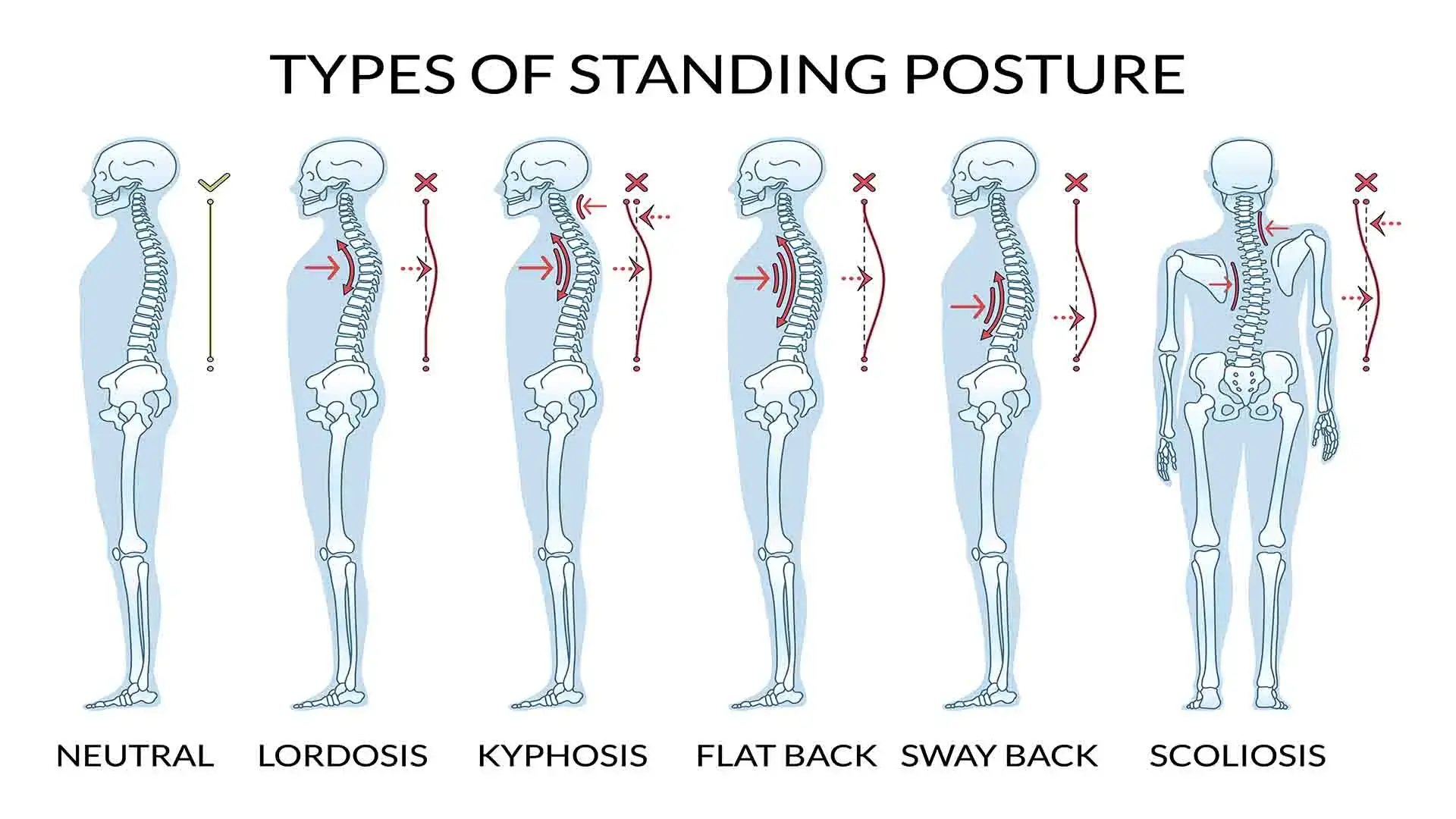
Posture is often misunderstood as a static appearance — a matter of standing upright or avoiding a slouch. In reality, posture is a dynamic reflection of how the brain and body organise themselves against gravity. Every posture reflects a story — years of habitual movement patterns, occupational demands, athletic training, and sometimes unresolved injuries.
In the studio, I do not simply observe whether someone is standing straight. I evaluate how the body distributes tension, how the pelvis aligns with the spine, and how the nervous system coordinates movement. Understanding a client's postural profile is the first step toward restoring efficient movement.
The Lordotic Profile (Anterior Pelvic Tilt)
The lordotic profile is characterised by an excessive arch in the lower back caused by an anterior tilt of the pelvis. This pattern is commonly observed in gymnasts, dancers, individuals carrying excess weight in the abdomen, and people who overtrain spinal extension. The lower back muscles become chronically tight while the abdominal wall becomes lengthened and less supportive. As a result, the lumbar spine absorbs excessive mechanical stress during everyday movement, which can contribute to lumbar discomfort and reduced spinal stability over time.
Rather than aggressively stretching the lower back, the approach focuses on restoring balance — activating inhibited gluteal muscles, strengthening the deep abdominal support system, and improving segmental spinal control. Through precise, controlled movement, the spine gradually returns to a more neutral and sustainable alignment.
The Kyphotic Profile (Rounded Upper Spine)
Kyphosis is characterised by excessive rounding of the upper back combined with a forward head position. This pattern has become increasingly common, particularly among individuals who spend long hours working at computers or using mobile devices. The chest muscles shorten and tighten while the upper back muscles become overstretched and weak. The head shifts forward, increasing the mechanical load on the cervical spine — often resulting in neck tension, shoulder discomfort, and restricted breathing patterns.
The goal is not simply to pull the shoulders back. The work restores balance between the front and back of the body — opening the chest through controlled extension, strengthening the upper back musculature, and retraining the deep neck flexors to support the head. The full apparatus system provides precise resistance that helps reintroduce proper spinal extension without compressing the joints.
The Sway Back Pattern
The sway back posture occurs when the pelvis shifts forward relative to the rib cage while the upper body leans backward to compensate. This pattern is commonly seen in individuals who habitually stand with their weight resting on one hip or with locked knees. Unlike the lordotic profile, the hip flexors in this pattern are often weak and lengthened. The abdominal wall becomes passive and the head may drift forward to maintain balance, creating an inefficient stacking of the body's weight-bearing structures.
Correction focuses on restoring vertical alignment and improving muscular engagement around the pelvis — strengthening the hip flexors, developing deep oblique abdominal tone, and retraining postural awareness during standing and walking. Through structured movement practice, the body gradually learns to support itself without collapsing into passive positions.
The Flat Back Profile
The flat back posture is defined by a reduction or complete loss of the natural lumbar curve. It is often associated with prolonged sitting or chronic posterior pelvic tilt. When the lumbar curve disappears, the spine loses its natural shock-absorbing capacity and the surrounding muscles become rigid and protective, limiting mobility. Clients with a flat back often experience stiffness upon waking, restricted spinal movement, and difficulty bending or extending comfortably.
Because the spine is often guarded in this pattern, mobility must be restored gradually. Training focuses on reactivating the posterior chain, encouraging controlled spinal extension, and restoring segmental spinal articulation. The objective is not simply flexibility, but the restoration of the spine's natural architecture.
Balance Over Perfection
No body is perfectly symmetrical, and posture is never static. However, every body can move toward greater balance and efficiency. Through a careful initial assessment, it becomes possible to identify the dominant postural pattern influencing a client's movement. From there, a movement strategy can be developed — one that restores structural integrity and allows the body to move with greater fluidity and resilience.
In Pilates, posture is not corrected through force. It is restored through intelligent movement and precise training.