Original Design vs Contemporary Reformer: What the Differences Actually Mean
Written by Abdul Kalam, Pilates instructor · For educational purposes only; not medical advice.
There is a conversation that runs continuously in Pilates circles about what is classical and what is contemporary. I want to sidestep the labels — they tend to generate more heat than light — and focus instead on something more concrete: what the design differences between original and contemporary Reformers actually are, how they affect the work, and why a client who is trying to understand what they are choosing between might find this useful.
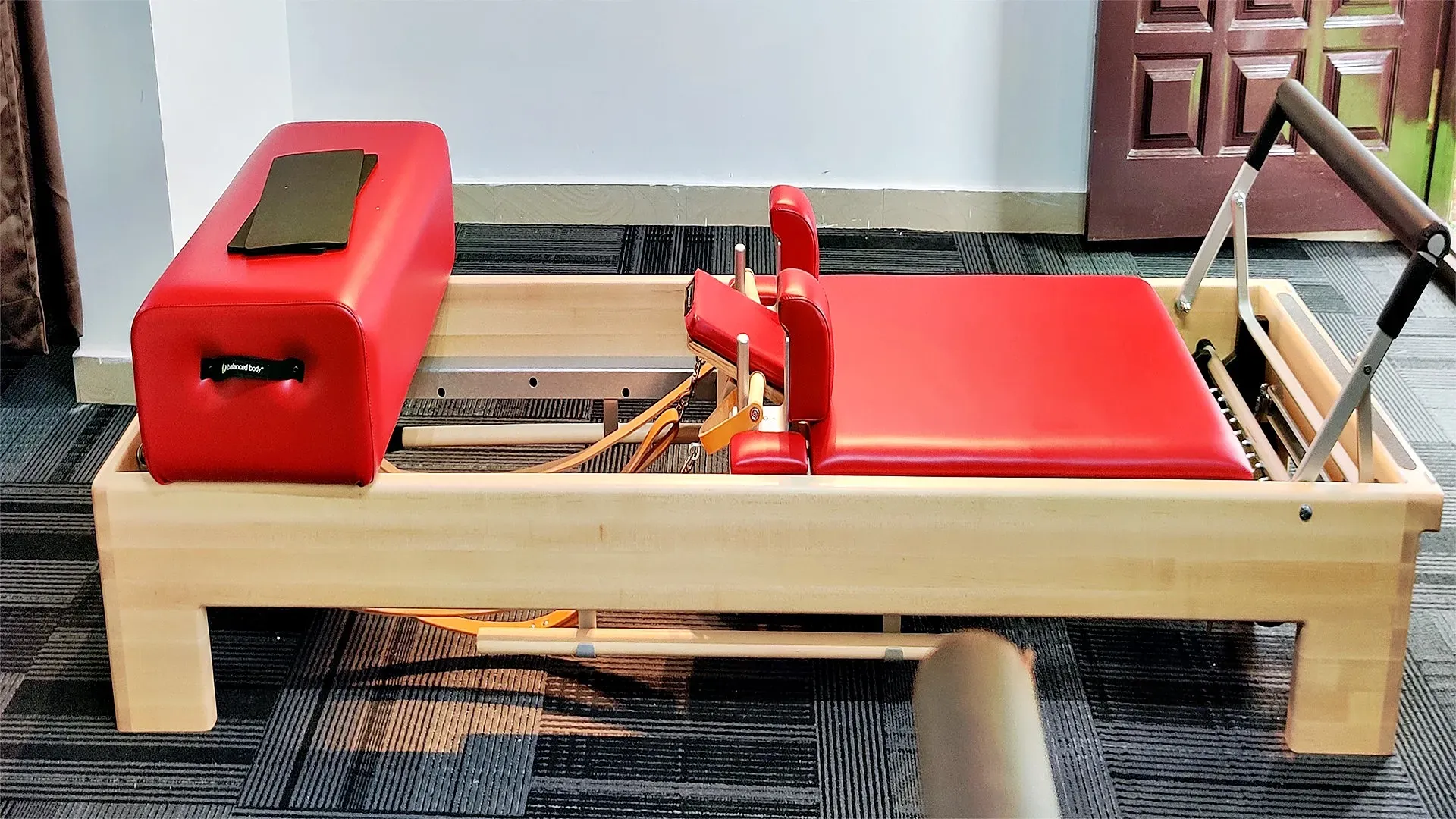
I am writing this from a specific position. My studio has a Legacy Cadillac — built to original design principles — and a Balanced Body Centerline Reformer, which is a contemporary apparatus. I have also worked thoroughly on a Legacy Reformer that a client in India acquired. So what follows is not theoretical. It is a comparison drawn from sustained daily experience with both approaches in the same room.
What "Original Design" Means
When I refer to original design, I mean apparatus built as close as possible to what Joseph Pilates actually used and intended — informed by people who studied the original equipment directly and have worked to preserve that understanding. This is a narrow field. The apparatus that comes closest to this standard is made by a small number of makers working from that lineage. Contemporary apparatus — however well made, however widely used — has been redesigned with different priorities: ease of manufacture, low maintenance, adjustability, commercial scalability.
Neither is inherently superior as an object. But they are different tools, and those differences have consequences for the work.
The Carriage: Axle and Rod vs Ball Bearing
The most fundamental mechanical difference is how the carriage moves. In original design Reformers, the carriage runs on an axle and rod system. In contemporary Reformers, it runs on ball bearings.
This is not a minor variation. The axle and rod system creates a specific quality of resistance and feedback as the carriage moves — a slight drag, a particular responsiveness to the body's organisation. The carriage communicates. Asymmetries in how the body is working show up clearly in how the carriage travels. Ball bearing systems are smoother, more frictionless, more forgiving. They are also less informative. The feedback loop between the body and the apparatus is different.
The axle and rod system also requires maintenance. Every three months the grease needs to be reapplied, the mechanism checked and serviced. This is not a disadvantage — it is part of working with apparatus that has been designed to a standard rather than for convenience. A contemporary Reformer will run for years without meaningful maintenance. An original design Reformer requires sustained attention. The commitment to that maintenance is part of what a studio committed to original design actually looks like in practice.
The Straps
Original design Reformers use leather straps. The strap comes directly over the wheel — no ropes, no pulleys, no risers. This directness matters. The connection between the hand or foot and the spring resistance is unmediated. The body feels the spring directly through the leather.
Contemporary Reformers typically use fabric or synthetic straps with pulley systems and riser options. These offer more adjustability and are easier to work with across a wider range of body types and exercise variations. But the quality of the connection — the felt sense of the spring — is different. When I have worked on original design apparatus and then returned to a contemporary Reformer, the difference in what the hands and feet receive through the straps is immediately apparent.
The Short Box
The short box on an original design Reformer is significantly shorter than what contemporary versions offer. The dowel is also shorter. These dimensions are not arbitrary — they reflect the proportions Joseph Pilates worked with and the specific demands those proportions place on the body.
A shorter box changes the nature of the exercise. The body has less to hold onto, less surface to distribute its weight across, less margin for compensation. The work is more demanding in the specific ways the exercises are designed to be demanding. Contemporary boxes, longer and more accommodating, make the exercises more accessible but alter their character.
The Footbar
On original design Reformers, the footbar is not fixed. It moves, and a plate enables transitions between exercises. The number of positions available is limited — one or two gear adjustments, not the multiple height and angle options that contemporary Reformers offer.
This simplicity is intentional. The limited adjustability means the body adapts to the apparatus rather than the apparatus adapting to the body. Contemporary Reformers, with their extensive footbar adjustability, make it easier to modify exercises to suit different bodies and capacities. That flexibility has genuine value in a commercial context. But it also changes the relationship between the practitioner and the apparatus.
Materials
Original design Reformers are typically made of wood or aluminium. This is not purely aesthetic — the material affects the quality of the apparatus, how it ages, how it responds to use over time, and what it communicates to the body working on it. Contemporary Reformers use modern materials optimised for durability, consistent manufacture, and ease of maintenance.
I work with a Balanced Body Centerline Reformer in my studio every day. It is well made, reliable, and serves the work I do with it. I am not dismissing contemporary apparatus. But having worked thoroughly on a Legacy Reformer — whose design principles sit much closer to original intent — I know the difference in what the two communicate. The Legacy apparatus has a quality that the Centerline, despite its considerable strengths, does not replicate.
What This Means for a Client
If you are choosing a studio and trying to understand what you are choosing between, the apparatus is worth examining. A studio working with original design apparatus — maintained to the standard that design requires, used as Joseph Pilates intended — is offering something specific. It is not simply a different brand of the same thing.
The differences I have described are not about aesthetics or tradition for its own sake. They are about what the apparatus communicates to the body, what it demands of the practitioner, and what kind of work becomes possible on it. Those differences are felt. They are not always immediately apparent to a beginner — but over months and years of consistent practice, the quality of the apparatus and the integrity of its design become part of what the practice produces.
The Reformer Joseph Pilates designed was a precise instrument. The differences between that instrument and its modern descendants are not incidental. They are the point.