From the Boardroom to the Cadillac
Written by Abdul Kalam, Pilates instructor · For educational purposes only; not medical advice.
In May 1998, I began a career in software engineering. For the next twenty years, I worked in IT — building systems, solving technical problems, and doing the kind of work that requires long hours at a desk and sustained mental focus.
In April 2018, I left that career to teach Pilates full time.
That transition is not as unusual as it might sound. But the path that led to it — a gradual shift in understanding what the body needs, and what a structured physical practice actually produces — is worth describing. Because it shaped the way I teach.
Twenty Years Behind a Screen
Software engineering in the late 1990s and through the 2000s meant long periods of concentrated, sedentary work. The demands were almost entirely cognitive — code to write, systems to debug, problems to think through. The body was largely incidental to the work.
I was not unusual in this. Most people working in technology during that period gave little structured attention to how they moved, how they sat, or what the accumulation of desk-based work was doing to their physical capacity over time. The effects are not dramatic in the short term. They are slow and quiet — a gradual tightening, a loss of range, a reduction in what the body can do without effort or discomfort.
I noticed these changes in myself. But noticing them and understanding what to do about them are different things.
Stepping into a Pilates Studio
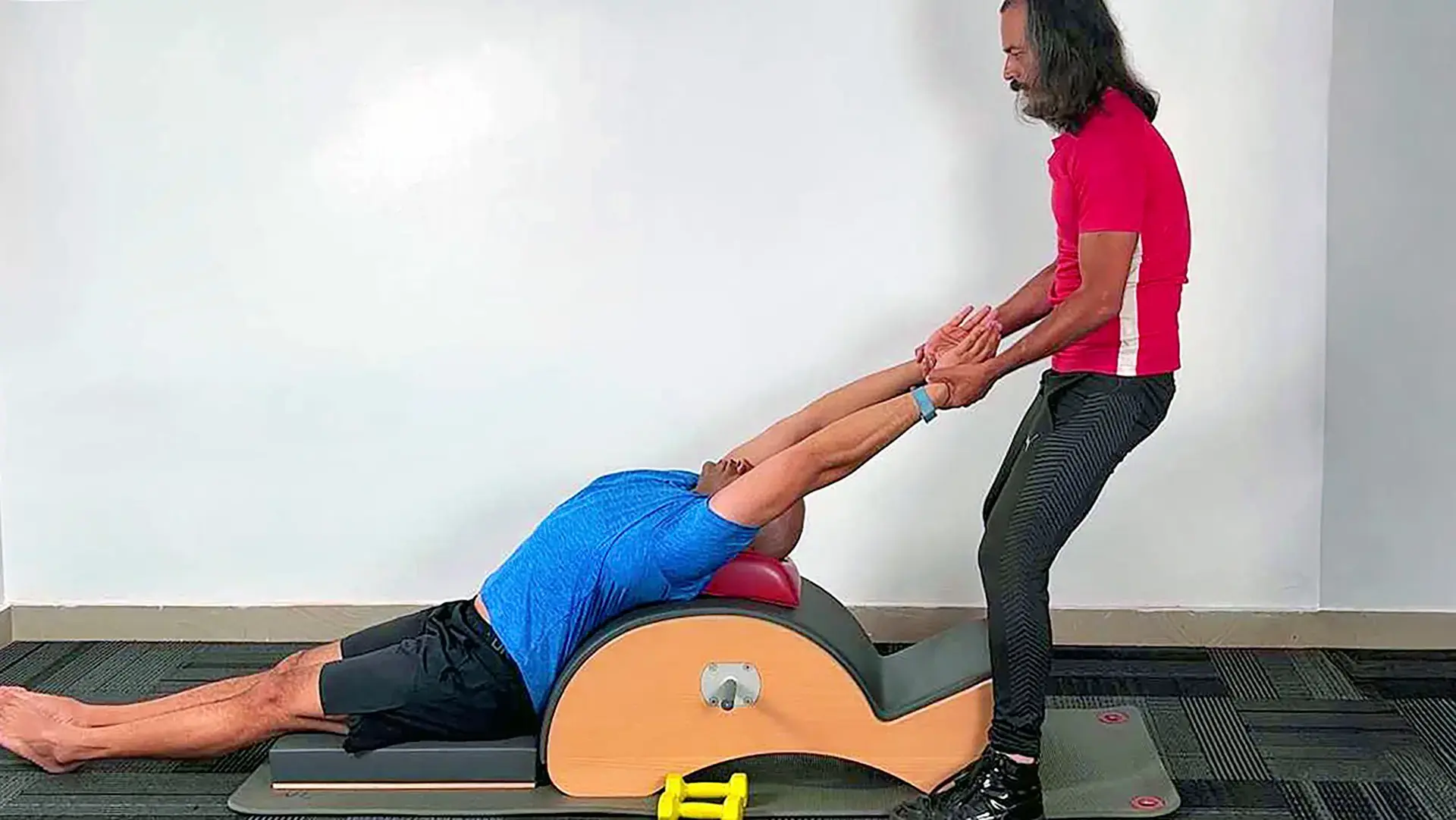
I began practicing Pilates as a student in 2016, while still working in IT. The studio I walked into taught Pilates on the full apparatus, with structured sequencing and individual attention.
The first thing I noticed was how much the work demanded. Not in the way that a gym demands effort — more in the way a complex technical problem demands attention. Every movement required coordination, precision, and a quality of focus I had not associated with physical practice.
The second thing I noticed was that I kept coming back. Over months of consistent practice, the work shifted from being something I was learning to something I was actively engaged with. The body changed slowly, in ways that were specific to my own structure and accumulated patterns. The changes were not dramatic and they were not promised by anything I had been told. They simply followed from showing up and practicing.
What the IT Years Actually Gave Me
When I made the decision to leave software engineering and train as a Pilates instructor, people occasionally asked what I was giving up. The better question turned out to be what I was bringing with me.
Twenty years in software engineering had developed specific capacities that transfer directly to teaching movement.
Discipline and structure were fundamental to the work. Writing reliable code requires following systems consistently, not improvising. That same disposition — trusting a proven structure, applying it carefully, and not shortcutting — is exactly what teaching Pilates on the full apparatus requires.
Building and understanding systems meant I approached the Pilates method the way I had approached software architecture — as an integrated whole, where each component exists in relation to the others. The method is not a collection of exercises. It is a system. Understanding it that way changes how you teach it.
Working with people in client-facing and team environments over two decades had developed the capacity to read what someone needs, communicate clearly, and adjust in real time. That capacity is central to one-on-one instruction.
Patience — the understanding that complex systems take time to develop and that shortcuts produce brittle outcomes — translated directly into how I work with clients over months and years rather than sessions.
The Gradual Shift
The decision to leave IT did not come from dissatisfaction with the work. It came from a growing clarity about what the body needs over a working life — and from experiencing, firsthand, what a structured physical practice actually produces when it is followed consistently.
By the time I completed my 600-hour full-apparatus training in 2017 and 2018, the question was no longer whether to make the transition. It was simply a matter of when.
In April 2018, after twenty years in software engineering, I left my IT career. By July of that year, I was teaching Pilates professionally.
The career changed. The disposition toward structured, systematic, patient work did not. It found a different application.
Why This Is Relevant to How I Teach
Many of the clients who come to this studio have careers that resemble the one I left. They work in technology, finance, or management. They spend long hours at desks. They are analytically capable and they understand systems. They tend to respond well to an explanation of why something is being done, not just instruction to do it.
I understand that context from the inside. The posture patterns that develop from years of desk-based work, the particular way that sustained mental effort manifests in the body, the difficulty of prioritising physical practice when cognitive demands feel more pressing — these are not abstract to me.
The studio I built is a private, appointment-only space. Fewer clients, deeper work, genuine continuity. That model reflects both what I learned from twenty years in a demanding profession, and what I discovered when I finally gave structured physical practice the attention it deserved.