The 10–20–30 Sessions Quote: What It Actually Means
Written by Abdul Kalam, Pilates instructor · For educational purposes only; not medical advice.
There is a quote attributed to Joseph Pilates that circulates widely in the Pilates world. It promises specific physical transformations after ten sessions, twenty sessions, and thirty sessions of Pilates. It appears in studio marketing, in instructor training materials, in introductory conversations with new clients. It is presented as something he said or wrote.
Having read both books Joseph Pilates published during his lifetime — Your Health (1934) and Return to Life Through Contrology (1945) — I have not found this quote in either of them. What he actually wrote is different. It is more specific, more grounded, and more honest than the paraphrase that has come to represent him.
What He Actually Wrote
In Return to Life Through Contrology, Joseph Pilates writes directly to the reader about what consistent practice of the exercises in his book will produce. His words, as closely as I can render them:
"If you will faithfully perform your Contrology exercises regularly — only 4 times a week for just 3 months as outlined in Return to Life — you will find your body development approaching the ideal, accompanied by renewed mental vigor. Contrology is designed to give you suppleness, natural grace, and skill that will be unmistakably reflected in the way you walk, in the way you play, and in the way you work. You will develop muscular power with corresponding endurance, ability to perform your duties, to play, to walk, run, or travel for long distances without undue body fatigue or mental strain."
This is what he wrote. Four times a week. Three months. The exercises as outlined in his book.
What Is Different About His Claim
Several things stand out when you read his actual words rather than the paraphrase.
First, the timeframe. He says three months of consistent practice — not ten sessions, not twenty, not thirty. Three months at four sessions per week is roughly fifty sessions. That is a more substantial commitment than any version of the ten-twenty-thirty quote implies, and a more realistic one for the kind of change he is describing.
Second, the condition. He says "as outlined in Return to Life" — meaning the mat sequence in that specific book, practiced exactly as he presents it. He is not describing apparatus work. He is not describing private instruction. He is describing someone practicing his mat exercises at home, four times a week, following his book. That is a specific and bounded claim.
Third, the outcomes. He describes suppleness, natural grace, skill, muscular power, endurance, and freedom from undue fatigue. These are movement qualities — how the body performs in everyday life and in physical activity. He is not claiming to cure conditions, fix injuries, or produce a particular physique. He is describing what consistent, correctly practiced movement produces over time.
The Problem With the Paraphrase
The ten-twenty-thirty sessions quote, whatever its origin, has become a sales tool. It offers a timeline — ten sessions to feel a difference, twenty to see a difference, thirty to have a new body — that makes Pilates sound like a programme with guaranteed outcomes measured in sessions rather than a practice measured in months and years of consistent effort.
That framing does several things, none of them entirely honest. It sets expectations that individual sessions cannot reliably deliver. It attaches specific promises to a format — sessions of unspecified length, content, and quality — that Joseph Pilates never described. And it creates a transactional relationship with the work that is at odds with how he understood it: as a daily discipline, practiced regularly, producing change gradually over time.
His actual claim is harder to market. Four times a week for three months, doing the mat sequence exactly as he prescribed it, is a commitment that requires patience and consistency. It does not lend itself to a punchy three-line promise. But it is what he wrote, and it is more useful to a prospective student than a paraphrase that promises transformation on a schedule he never specified.
What This Means for Studio Practice
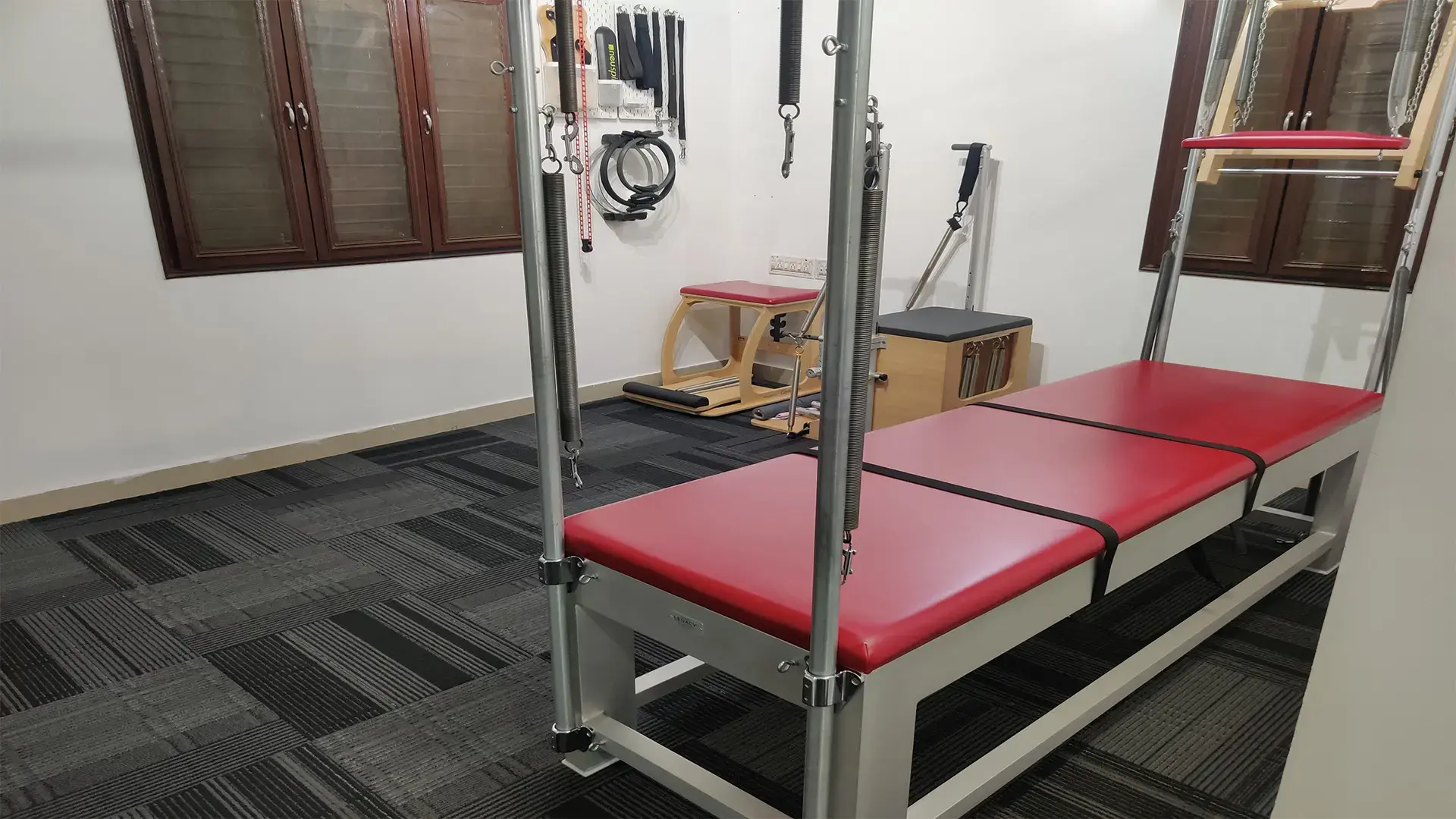
It is worth being honest about the relationship between Joseph Pilates' mat sequence and what happens in a private apparatus studio. He wrote about mat practice at home. What I teach is private instruction across the full apparatus — Reformer, Cadillac, Wunda Chair, Barrels, mat. These are related but not identical things.
The apparatus work builds on the same principles — breath, control, sequential movement, full-body coordination. In many ways the apparatus makes the work more accessible, more precise, and more adaptable to individual bodies than mat work alone. But it is a different context from the one he was describing in Return to Life, and I think that distinction is worth acknowledging rather than papering over.
What I take from his actual words is the spirit rather than the letter: consistent practice, done correctly, produces real change. The timeline is months, not sessions. The condition is regularity and precision, not a particular number of appointments. That is true of apparatus work as much as it is of mat work — and it is a more honest foundation for setting expectations with a new client than any version of the ten-twenty-thirty quote.
He promised suppleness, natural grace, and skill — reflected in how you walk, how you play, how you work. Four times a week, three months, the exercises as he outlined them. That is what he actually wrote. It is enough.